
.png)
UN Crime Congress 2026
Ancillary Event - Regional Voices Against Organized Crime: Strengthening Civil Society Networks for Localized Impact (Monday 28th September 2026)
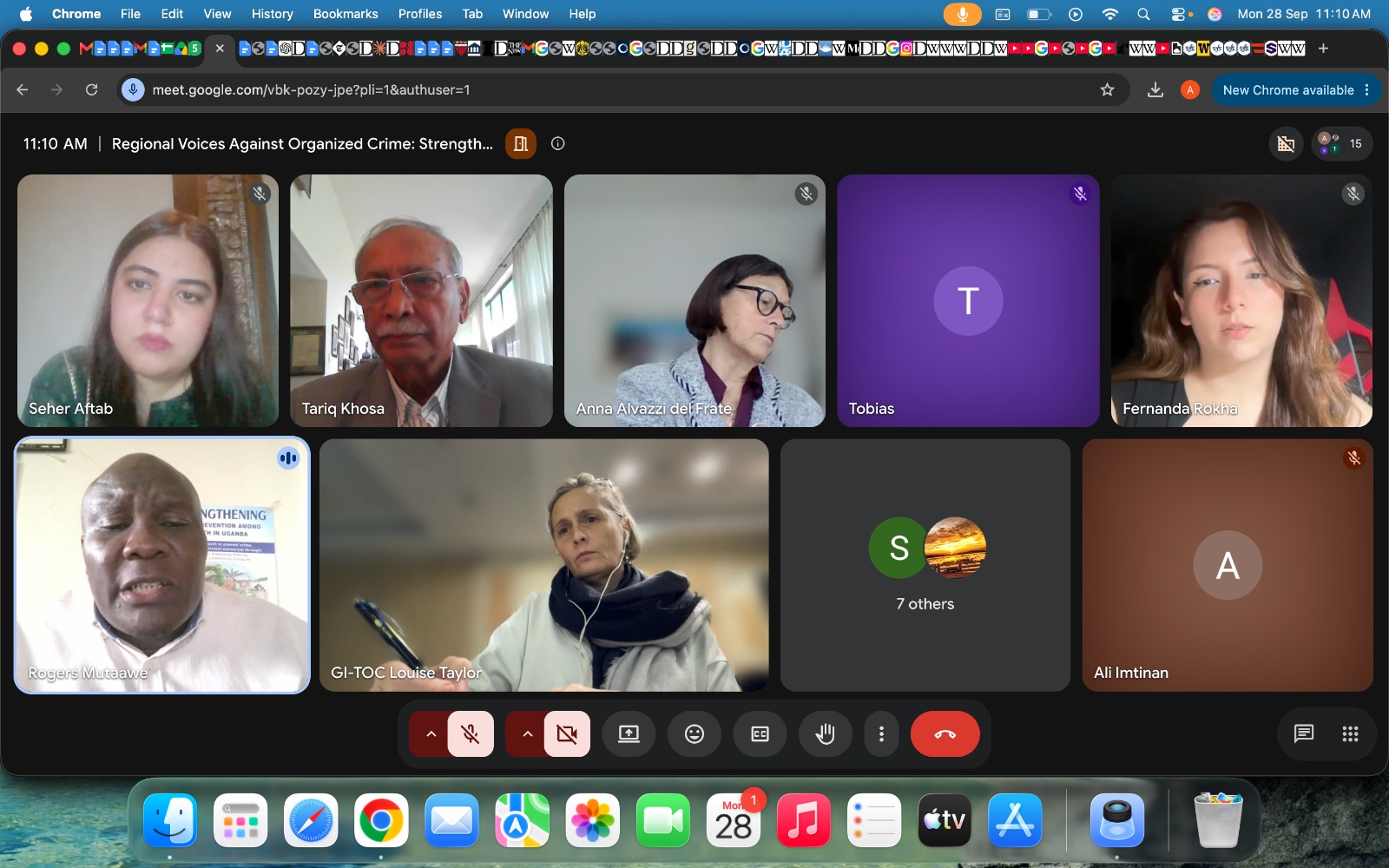
On 28 September 2026, the side event titled “Regional Voices Against Organized Crime: Strengthening Civil Society Networks for Localized Impact” was held at the 15th United Nations Congress on Crime Prevention and Criminal Justice in Abu Dhabi. Organised by NET4U Asia, the session brought together representatives from NET4U Africa, NET4U Americas, NET4U Asia and NET4U Europe, along with the Global Initiative Against Transnational Organized Crime (GI-TOC). The discussion examined the experiences of developing regional civil society networks and considered how these networks can strengthen member engagement, develop practical collaboration, support youth participation, and translate regional experience and locally grounded knowledge into wider advocacy and international organised crime processes.
Representing the Centre for Human Rights (CFHR) and Coordinator of NET4U Asia, Seher Aftab led the panel as the moderator. The panelist included Mr. Rogers Mutaawe (NET4U Africa), Mr. Tariq Khosa (NET4U Asia, Ms. Anna Alvazzi del Frate (NET4U Europe), Ms. Fernanda Rokha (NET4U Americas) and Ms. Louise Taylor (Global Initiative Against Transnational Organized Crime).
The panel discussion allowed panelists to share experiences and lessons from the development of the four NET4U regional networks, examine challenges relating to member engagement, governance, youth participation and sustainability explore how newer regional networks can complement established civil society alliances and platforms.
Key Takeaways and Forward-Looking Priorities
1. From networks to practical collaboration: The discussion pointed towards more issue-based and practical collaboration between regional networks, including joint initiatives, peer learning, evidence-sharing and coordinated advocacy.
2. Stronger civil society participation in global processes: The session highlighted the need to strengthen opportunities for civil society to contribute to international organised crime processes, including future UN Crime Congresses.
3. Connecting global moments with concrete action: Upcoming opportunities such as the 15 November International Day and other global events can provide a basis for coordinated regional activities and collective advocacy.
4. A more concrete youth engagement agenda: Youth engagement should move beyond representation towards sustained opportunities to shape prevention, advocacy and priorities, including consideration of a Youth Congress as part of the wider regional-global agenda.
5. Sustaining locally grounded networks: For regional networks to remain meaningful to their members, collaboration needs to be grounded in members’ evidence, experiences and priorities, while creating mechanisms for those perspectives to inform wider regional and global processes.
Ancilliary Event - Building Community Resilience to Combat Organized Crime in South and Southeast Asia: Civil Society Perspectives (Tuesday 29th September 2026)
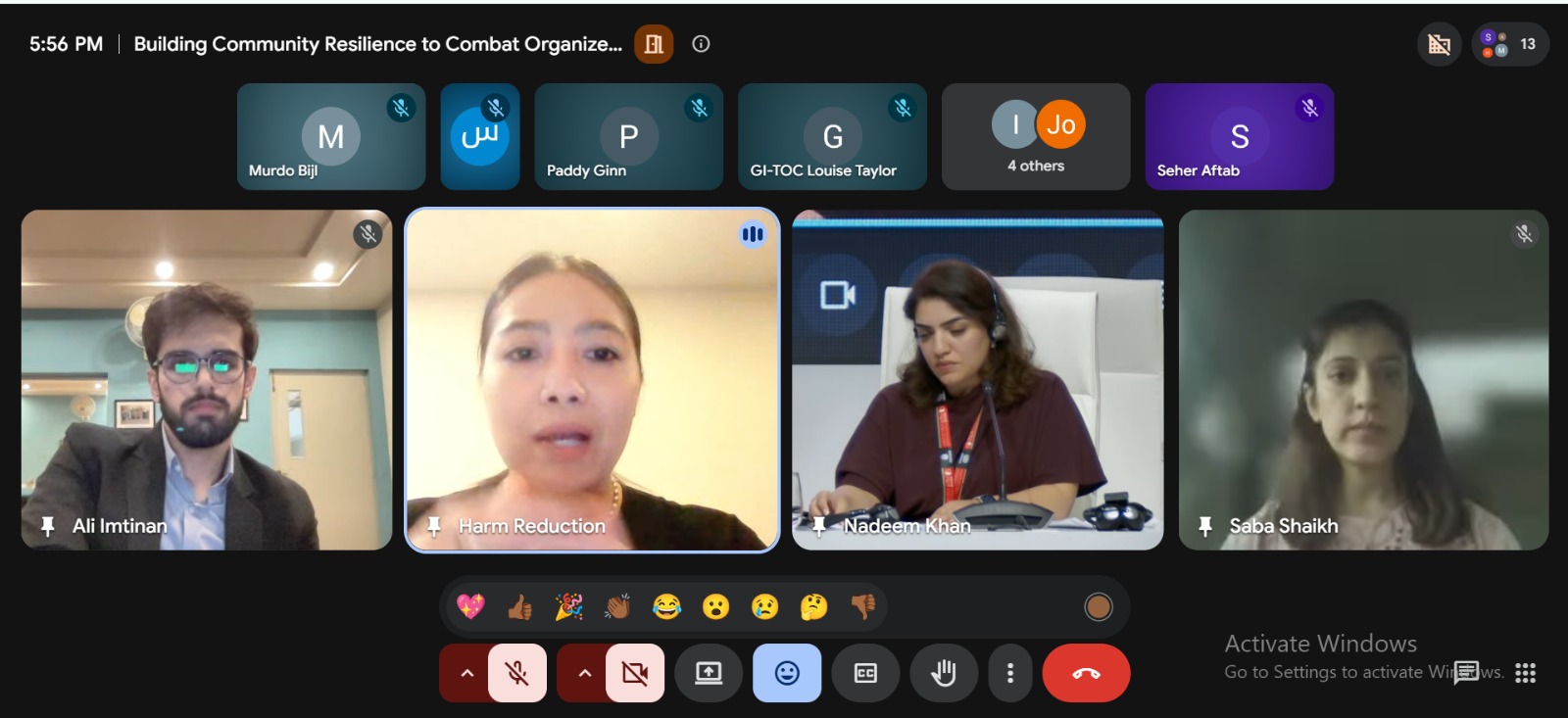
On 29th September 2026, the Centre for Human Rights along with the Global Initiative Against Transnational Organised Crime (GI-TOC) co-hosted a side event titled “Building Community Resilience to Combat Organized Crime in South and Southeast Asia: Civil Society Perspectives” at the 15th United Nations Congress on Crime Prevention and Criminal Justice in Abu Dhabi.
The session was moderated by Sarah Hayat Malik (GITOC) and panelists included Latt Thri Aung (Southeast Asia Harm Reduction Association), Ali Imtinan (CFHR) and Saba Shaikh (Dastak Society). The session brought together perspectives from Thailand and Pakistan, drawing on experiences from resilience programming supported by the GI-TOC. The discussion further explored lessons from these initiatives, the importance of engaging women and young people, and what is needed to sustain and scale locally led responses.'
Drawing on experiences from Pakistan and Thailand, the session explored what community resilience looks like in practice, the role of civil society in prevention and protection, and what is needed to sustain and scale locally led responses.
Three reflections stood out:
1. Community resilience is not a soft alternative to enforcement. It is often what makes protection possible in the first place — helping communities recognise risks, build awareness, support one another and respond before vulnerabilities are exploited.
2. Trust with authorities has to be earned and continuously tested. Meaningful engagement cannot be assumed. It depends on relationships, responsiveness and whether communities see that engagement translating into protection and support.
3. There is real appetite — and experience — for South and Southeast Asian civil society to learn from one another. The contexts may differ significantly, but there is value in sharing approaches, learning from challenges and adapting locally led responses across contexts.
The discussion reinforced that responses to organised crime cannot be built only from the top down. Communities need to be part of how risks are understood, prevention is designed and protection is delivered.
For us, one of the most useful questions emerging from the discussion is not simply how communities can become more resilient, but how institutions and civil society can create the conditions for that resilience to translate into sustained protection.
Ancillary Event - Regional Voices Against Organized Crime: Strengthening Civil Society Networks for Localized Impact (Monday 28th September 2026)
On 28 September 2026, the side event titled “Regional Voices Against Organized Crime: Strengthening Civil Society Networks for Localized Impact” was held at the 15th United Nations Congress on Crime Prevention and Criminal Justice in Abu Dhabi. Organised by NET4U Asia, the session brought together representatives from NET4U Africa, NET4U Americas, NET4U Asia and NET4U Europe, along with the Global Initiative Against Transnational Organized Crime (GI-TOC). The discussion examined the experiences of developing regional civil society networks and considered how these networks can strengthen member engagement, develop practical collaboration, support youth participation, and translate regional experience and locally grounded knowledge into wider advocacy and international organised crime processes.
Representing the Centre for Human Rights (CFHR) and Coordinator of NET4U Asia, Seher Aftab led the panel as the moderator. The panelist included Mr. Rogers Mutaawe (NET4U Africa), Mr. Tariq Khosa (NET4U Asia, Ms. Anna Alvazzi del Frate (NET4U Europe), Ms. Fernanda Rokha (NET4U Americas) and Ms. Louise Taylor (Global Initiative Against Transnational Organized Crime).
The panel discussion allowed panelists to share experiences and lessons from the development of the four NET4U regional networks, examine challenges relating to member engagement, governance, youth participation and sustainability explore how newer regional networks can complement established civil society alliances and platforms.
Key Takeaways and Forward-Looking Priorities
1. From networks to practical collaboration: The discussion pointed towards more issue-based and practical collaboration between regional networks, including joint initiatives, peer learning, evidence-sharing and coordinated advocacy.
2. Stronger civil society participation in global processes: The session highlighted the need to strengthen opportunities for civil society to contribute to international organised crime processes, including future UN Crime Congresses.
3. Connecting global moments with concrete action: Upcoming opportunities such as the 15 November International Day and other global events can provide a basis for coordinated regional activities and collective advocacy.
4. A more concrete youth engagement agenda: Youth engagement should move beyond representation towards sustained opportunities to shape prevention, advocacy and priorities, including consideration of a Youth Congress as part of the wider regional-global agenda.
5. Sustaining locally grounded networks: For regional networks to remain meaningful to their members, collaboration needs to be grounded in members’ evidence, experiences and priorities, while creating mechanisms for those perspectives to inform wider regional and global processes.
Ancilliary Event - Building Community Resilience to Combat Organized Crime in South and Southeast Asia: Civil Society Perspectives (Tuesday 29th September 2026)
On 29th September 2026, the Centre for Human Rights along with the Global Initiative Against Transnational Organised Crime (GI-TOC) co-hosted a side event titled “Building Community Resilience to Combat Organized Crime in South and Southeast Asia: Civil Society Perspectives” at the 15th United Nations Congress on Crime Prevention and Criminal Justice in Abu Dhabi.
The session was moderated by Sarah Hayat Malik (GITOC) and panelists included Latt Thri Aung (Southeast Asia Harm Reduction Association), Ali Imtinan (CFHR) and Saba Shaikh (Dastak Society). The session brought together perspectives from Thailand and Pakistan, drawing on experiences from resilience programming supported by the GI-TOC. The discussion further explored lessons from these initiatives, the importance of engaging women and young people, and what is needed to sustain and scale locally led responses.'
Drawing on experiences from Pakistan and Thailand, the session explored what community resilience looks like in practice, the role of civil society in prevention and protection, and what is needed to sustain and scale locally led responses.
Three reflections stood out:
1. Community resilience is not a soft alternative to enforcement. It is often what makes protection possible in the first place — helping communities recognise risks, build awareness, support one another and respond before vulnerabilities are exploited.
2. Trust with authorities has to be earned and continuously tested. Meaningful engagement cannot be assumed. It depends on relationships, responsiveness and whether communities see that engagement translating into protection and support.
3. There is real appetite — and experience — for South and Southeast Asian civil society to learn from one another. The contexts may differ significantly, but there is value in sharing approaches, learning from challenges and adapting locally led responses across contexts.
The discussion reinforced that responses to organised crime cannot be built only from the top down. Communities need to be part of how risks are understood, prevention is designed and protection is delivered.
For us, one of the most useful questions emerging from the discussion is not simply how communities can become more resilient, but how institutions and civil society can create the conditions for that resilience to translate into sustained protection.

Local Action, Global Impact
We work across Pakistan, driving legal reform, advocacy, and policy change to protect human rights and empower communities.